
Encrustations
Indigenous people residing within the boreal forest began crafting pottery vessels thousands of years ago. These clay fired pots were used for cooking, storage or likely a combination of both. Sometimes, during the process of cooking, food particles, would get baked or burned onto a surface of the pottery. For example, during a long period of simmering a stew, a build up of food may be baked onto the interior surface of the pot. In other situations, hot food or liquid substances might splash up or boil over into crevices on the lip or exterior surface of the pot and then burn to become an adhesion. In some instances, these residual food particles (often referred to as “residues”) would become carbonized through the process of excessive heating (baking and/or burning). Furthermore, these residues may become preserved and be visible as black areas of “encrustations” on the surface of pottery. Photographs of the exterior, interior and lip surfaces of a single pottery sherd with adhesions of carbonized residues are shown below.
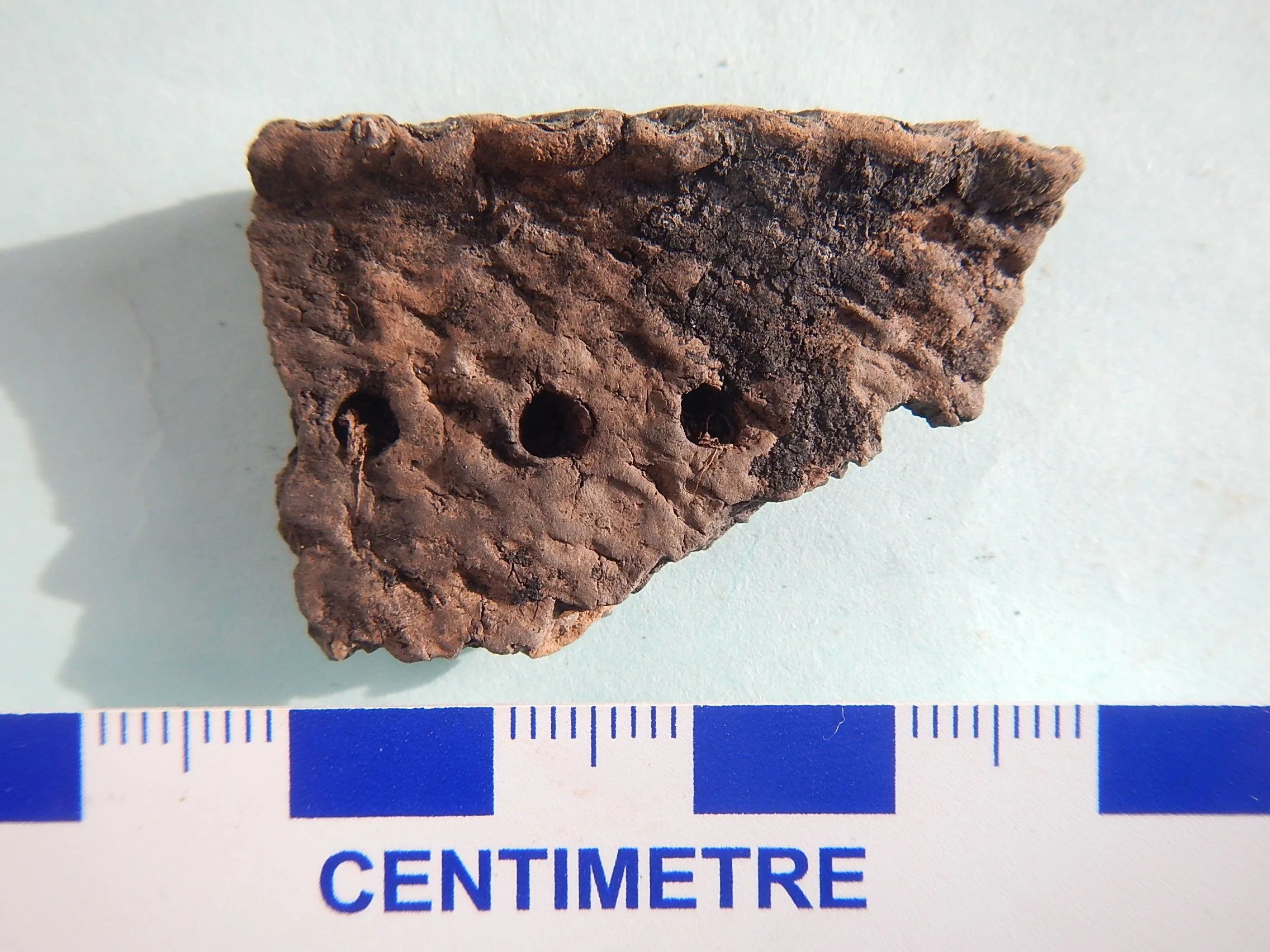
Pottery sherd from EdKh-1 with carbonized residue showing as black area on the exterior surface
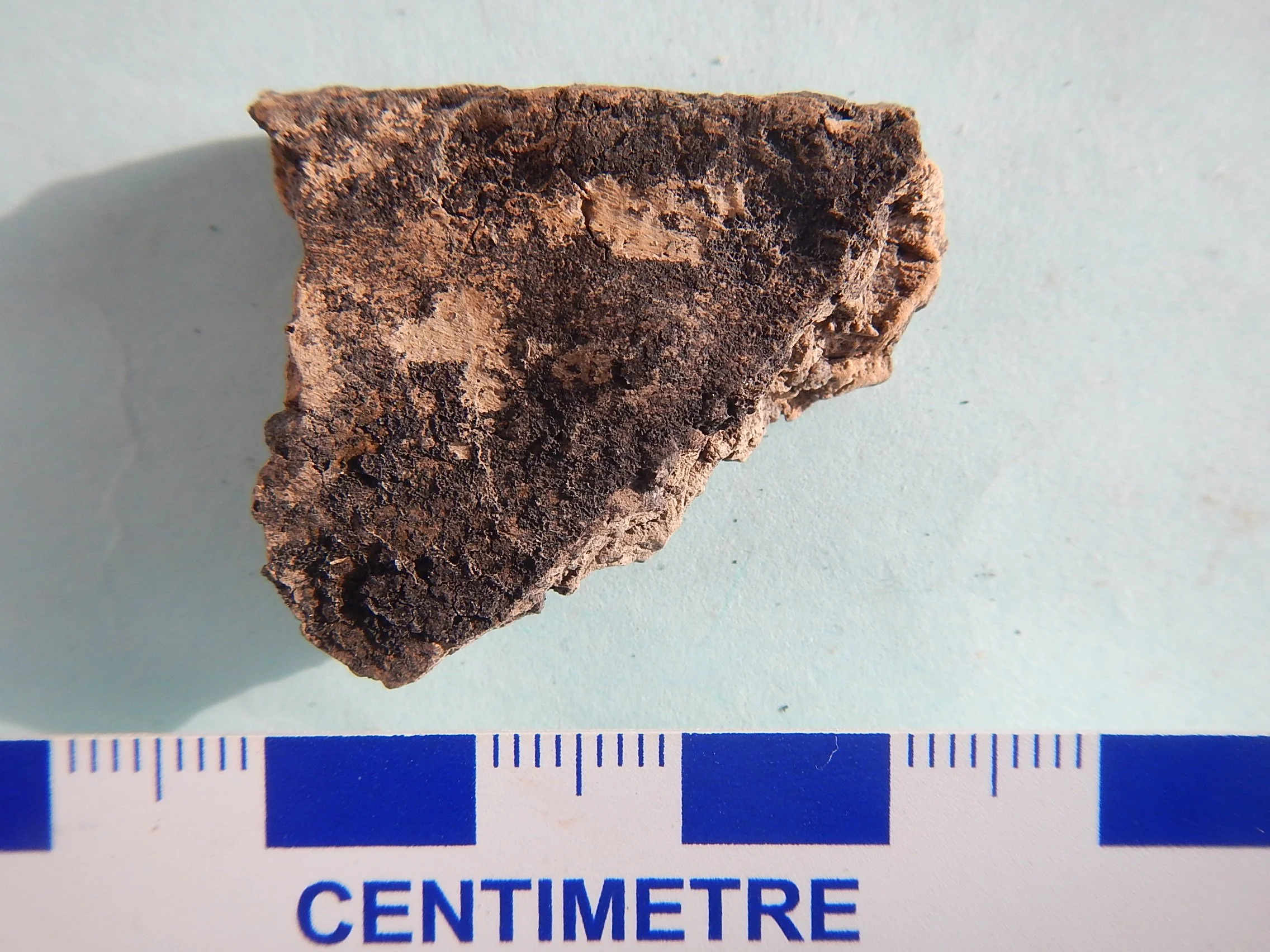
Pottery sherd from EdKh-1 with carbonized residue showing as black area on the interior surface
Over time the residue encrustation will naturally fall off. Therefore, for research purposes it is important to identify when encrustations are present because, if enough of a residue sample is present, the carbonized material can be used to obtain a radiocarbon date with a direct association to the pottery vessel. Furthermore, if plant material is present within the residue sample, it may be possible to determine the type of food being cooked in the pot.

Carbonized food encrustations seen as the black material contained within the decorative elements on the lip of the vessel.
