Centuries Old Fingerprints
Sometimes cool artifact discoveries are not immediately recognized in the field but instead only become apparent back at the lab during analysis. For example, the two broken pottery rim sherds (considered to be from the same vessel) were recovered from the eroded shoreline of a site in 2017. The dirt covered pottery sherds (below) were bagged in the field along with other artifacts recovered that day. Several days later the artifacts were removed for a light cleaning prior to being analyzed.
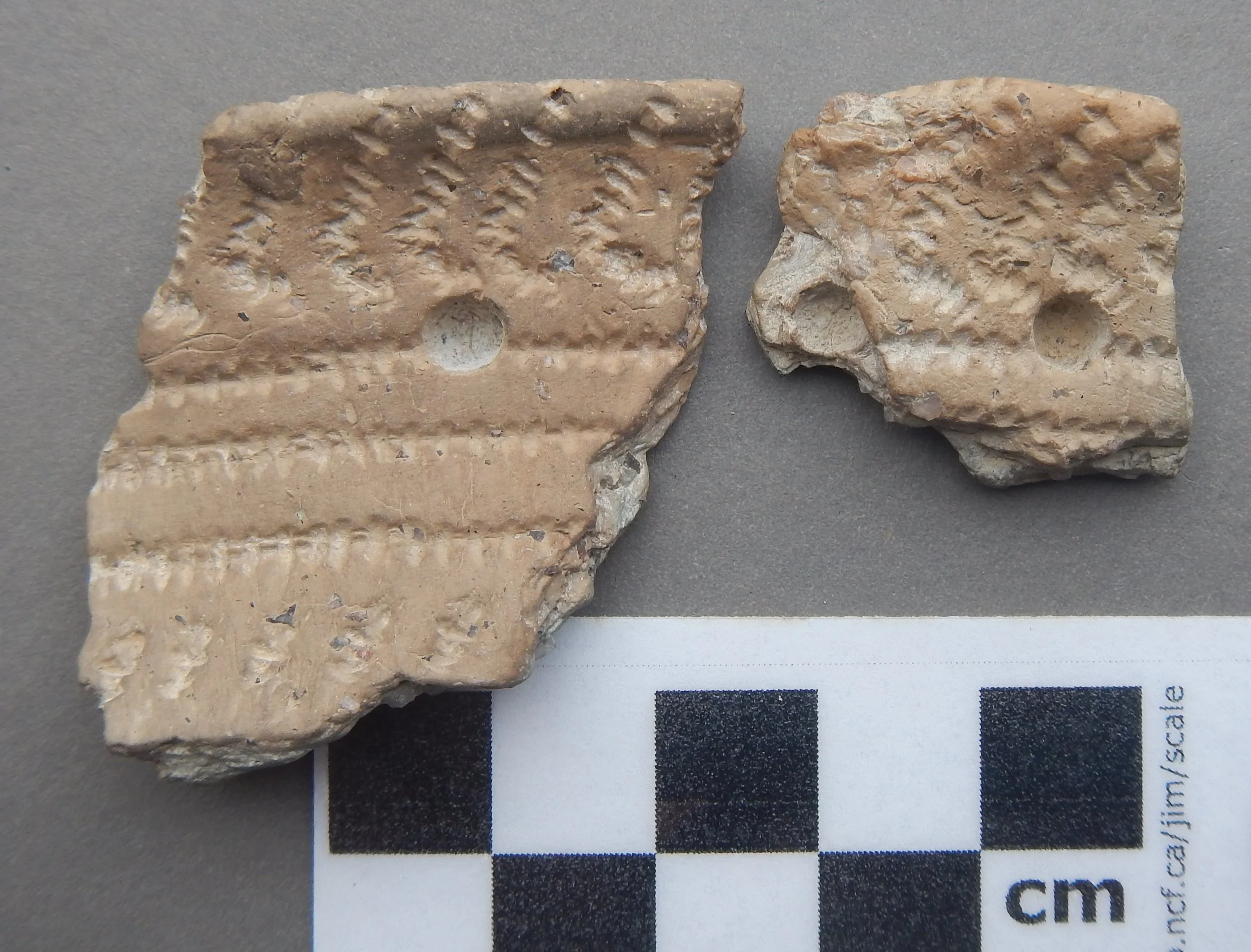
Exterior view of two Late Woodland pottery rim sherds belonging to one vessel recovered from site EaKa-1
The interior surface of the larger rim sherd was exfoliated (damaged) but the interior surface of the smaller rim sherd was intact. During the examination I observed the remnants of fingerprints baked into the clay meaning that were most likely made by the person who made the pot! Features of the two rim sherds, including exterior decorative style, are characteristic of pottery from the Late Woodland period. A very rough approximation of the age would be 900 A.D to 1200 A.D. which translates to at least 800 years old. Therefore, these fingerprints were made many centuries ago!
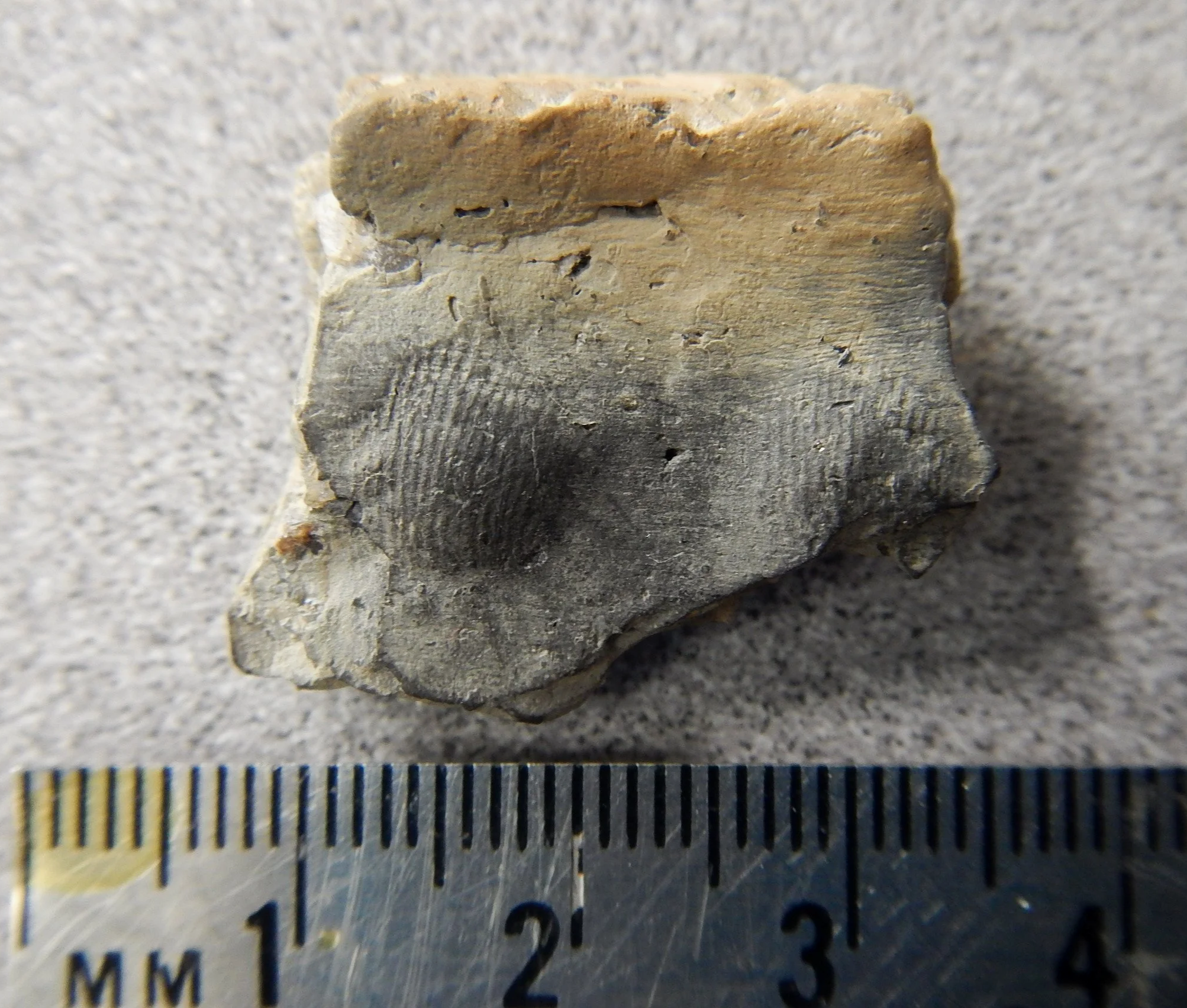
Interior view of the smaller sherd with fingerprints visible
The circular shaped impressions seen on pre-contact Indigenous pottery vessels are considered by archaeologists to be design elements and referred to as “punctates”. They are thought to be made by impressing a rounded tool into the clay when it is still wet. Depending on how much pressure is applied by the potter when creating a punctate, corresponding bumps (called “bosses” by archaeologists) can occur on the other side of the pot. Typically punctates are an exterior decoration while bosses are an interior decoration although in some cases exterior bosses on the exterior of the vessel (created by the application of interior punctates) are seen.
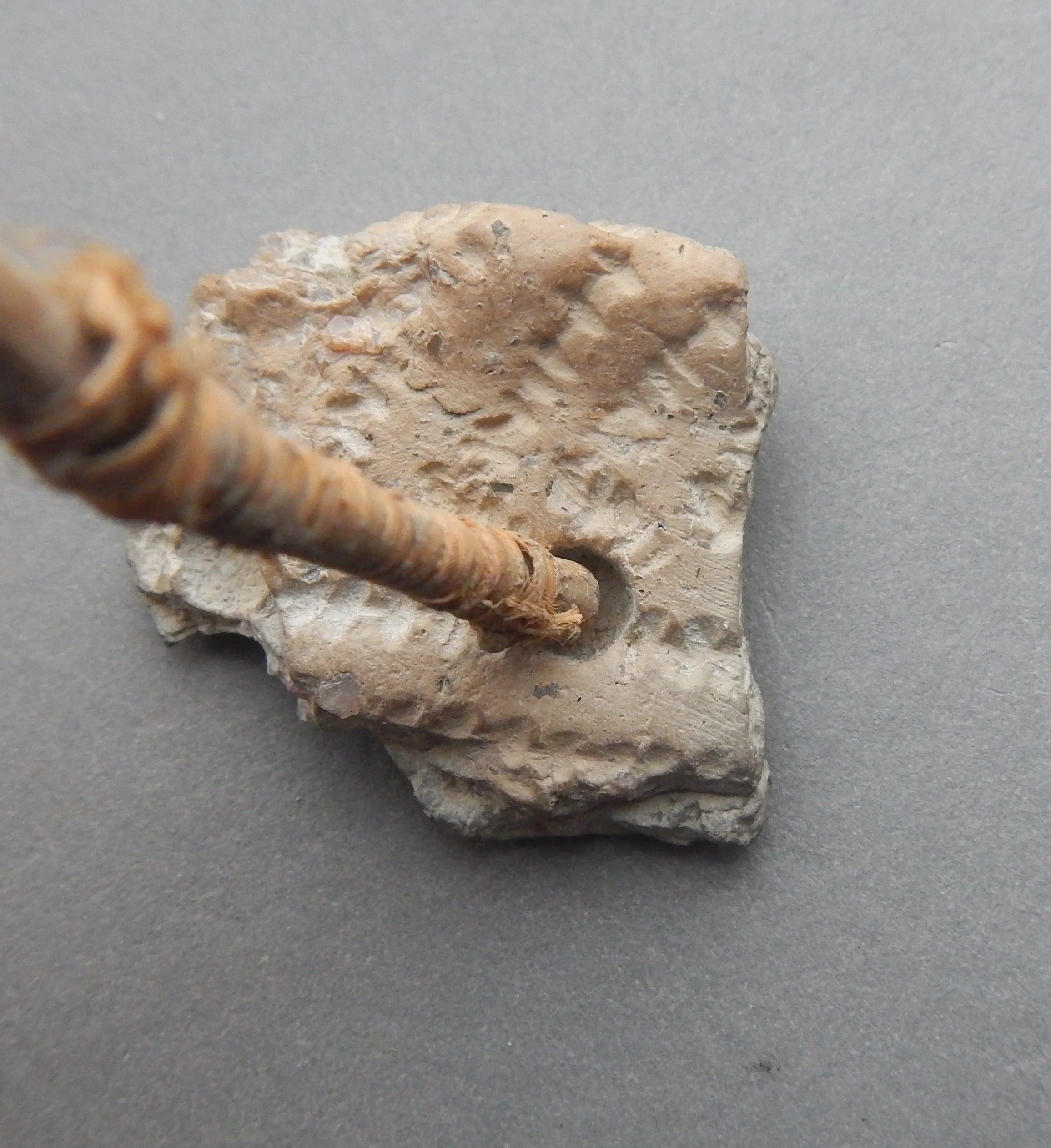
Replicated circular tool showing how circular shaped punctate may have been impressed to create a “punctate” design element
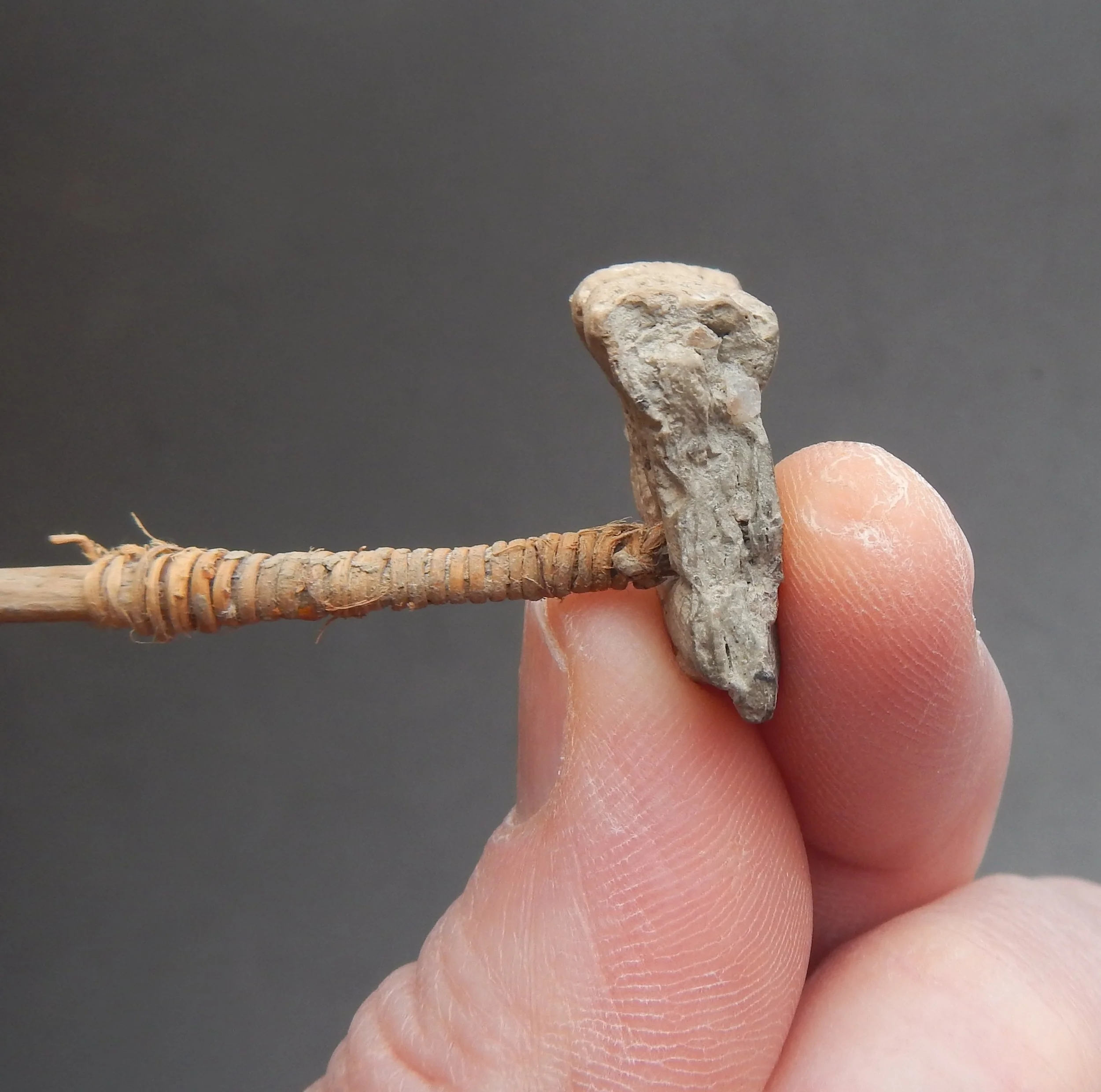
Replicated circular tool showing how the impression of a punctate may have created a corresponding “boss” with a fingerprint impression
On the above rim sherd, It is likely that as the circular tool was being pressed into the surface of the pottery by the potter, they also held a finger on the interior side of the pot to stop the tool from going all the way through. Therefore, in this instance a fingerprint impression was made on the corresponding “boss”. Sometimes the wet clay on the interior of the vessel is smoothed over before it dries removing both the fingerprints and the bosses. However, in this case the interior of the pot was not wiped before the clay dried allowing the fingerprints to remain on the bosses. This is so cool on many levels, but is particularly thrilling as it paints the image of an individual potter. A person with an identity who created the clay pot so many years ago.
Further to this, ongoing research is being conducted by other archaeologists regarding utilizing fingerprints found on pottery to determine the age and sex of the potters. Click on the attached link provided courtesy of Dr. Kent Fowler (http://dx.doi.org/10.1371/journal.pone.0231046) to view the PlosOne open access paper titled “The Identity of Potters in Early States: Determining Age and Sex of Fingerprints on Early Bronze Age Pottery from Tell Es.Safi/Gath, Israel by Dr. Kent Fowler et.al. 2019.