
Two More Grooved Gouges
In early spring of 2003, the water levels on Lac Seul were extremely low (below normal) providing me the opportunity to revisit a site designated as EaKa-34. Back in 1991 (twelve years earlier), I had made a cool discovery in an area of this site that is normally under water. (Click the link to read details and see pictures of the first grooved gouge). During the 2003 site visit, and while examining the remnants of a possible structure, a second grooved gouge was discovered tucked within the rock cobbles. This was extremely exciting as this artifact type is quite rare so finding two at the same site is very cool! To read more about this site click on the link (ancient structure remains).
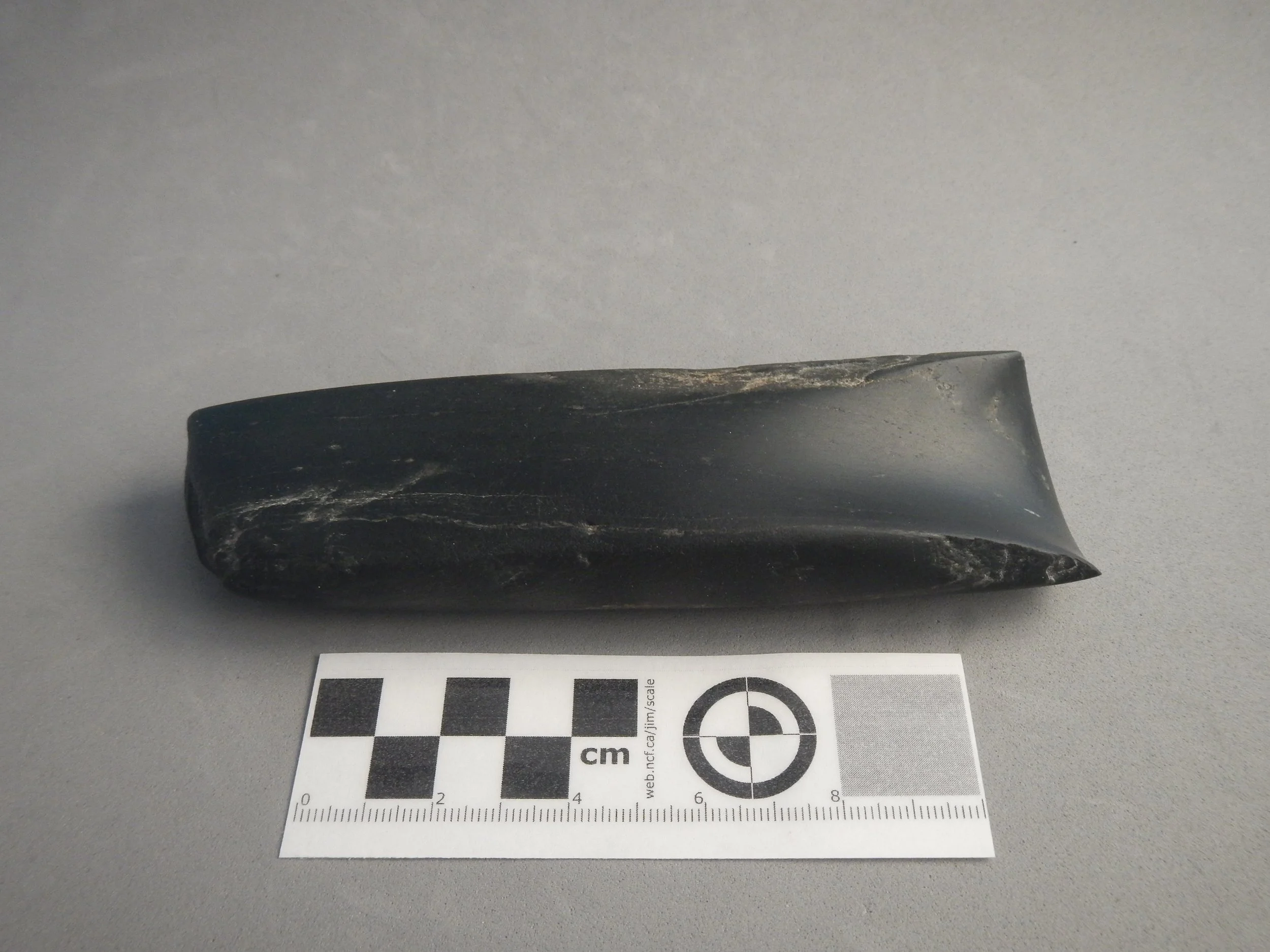
Photo (with scale) of second grooved gouge discovery (inside view)
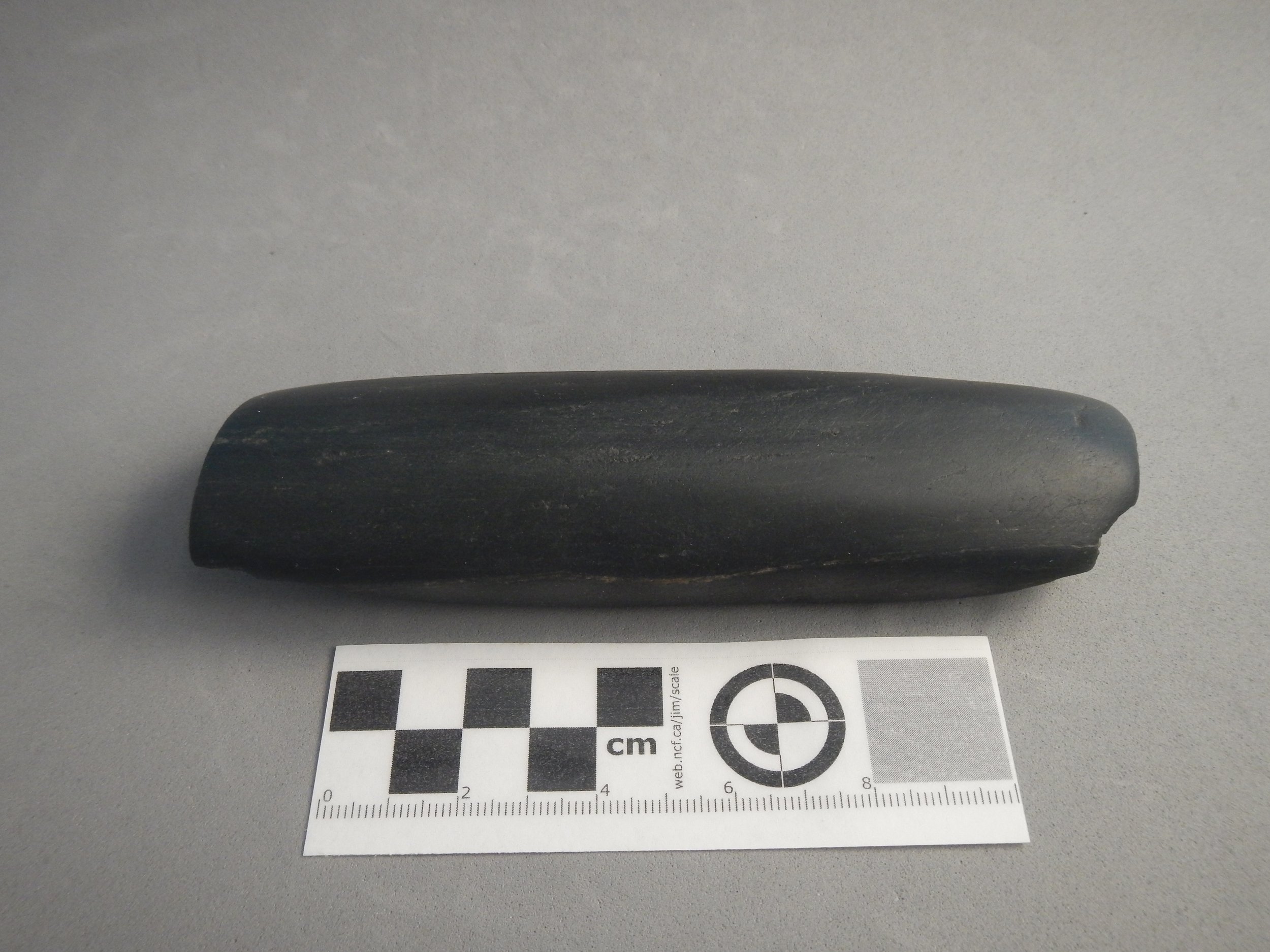
Photo (with scale) of second grooved gouge discovery (exterior view)
With an overall length of 14.65 centimeters (cm), the second gouge is somewhat shorter that the first one recovered. The other dimensions are as follows: 4.38 cm (width), 2.58 cm (thickness) and 301 grams (g) weight. All surfaces of this artifact are highly polished. Click on the link to view a 3-D scan of the second grooved gouge recovery courtesy of the Lakehead University Anthropology department.
In July of 2003, an additional visit was made to the site (EaKa-34) as water levels remained below normal over the summer. During my brief examination of the shoreline, I spotted an elongated stone situated within the finer beach sand soils at the extreme southwest tip of the island. Initially I was skeptical as to whether the object was even an artifact as the exterior surface was crudely shaped. However, after cleaning off the exterior dirt and making a closer examination of the stone, it clearly had been shaped and was definitely an artifact so I bagged it up and removed it from the site.
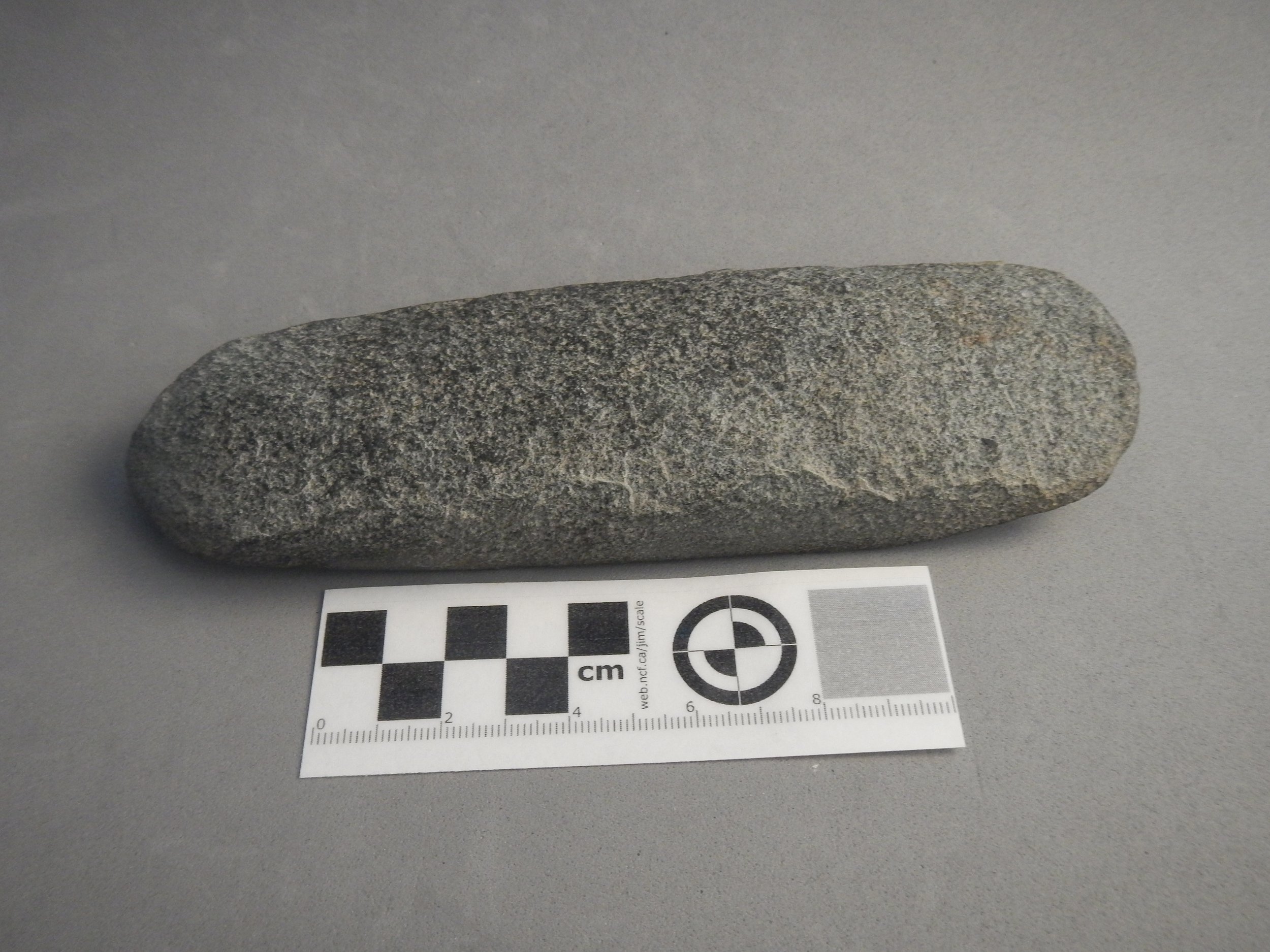
Photo (with scale) of third grooved gouge discovery (exterior view)
Later on, and back at the lab, I was able to take the time to carefully scrutinize the stone and came to the conclusion that the item had been completely shaped from pecking (as opposed to the lithic reduction method of flaking). Although this one lacks the high polish of the other two, this artifact is clearly in the initial stages of being converted into another highly polished grooved gouge as can be seen with the smoothing that has taken place along one of the side surfaces. A third grooved gouge from the same site grooved! What a cool discovery!
The dimensions of the third (unfinished) gouge are as follows: 17.45 cm (length), 5.69 cm (width), 2.60 cm (thickness) and 420 g (weight).. I am unsure of what the lithic material is but it is likely to be the same underlying rock used to create the two highly polished gouges. If this is true it represents an amazing transformation as the final product looks nothing like the original after the process of polishing is completed. Click on the link to view a 3-D scan of the third grooved gouge courtesy of the Lakehead University Anthropology department.
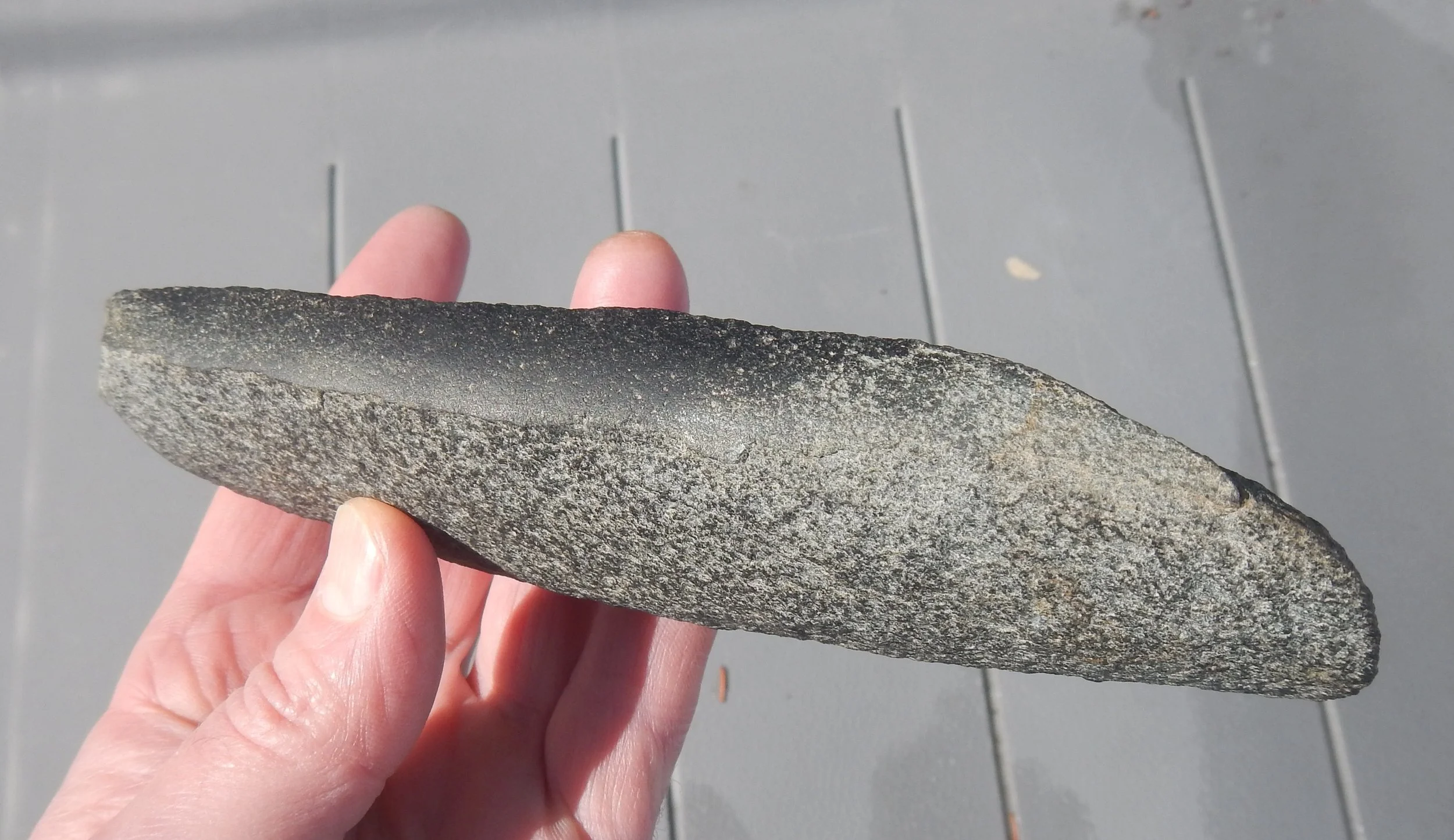
View of third grooved gouge with one surface enroute to becoming highly polished in contrast to roughed out (pecked) surfaces
